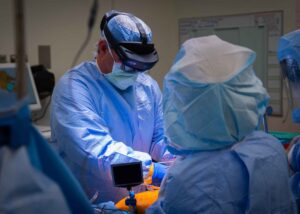
Usage Rights: All content is available for editorial use with attribution to El Camino Health

Mountain View, CA (October 9, 2025) – Even as death rates from breast cancer continue to decline, the number of Asian American and Pacific Islander women diagnosed with the disease is on the rise.
Tran Ho, D.O., FSSO, FACS, a breast surgical oncologist at El Camino Health, notes that for the increase in diagnoses among certain ethnic groups are complex.
“More research is needed to better understand the underlying causes of these trends,” said Dr. Ho.
Cases among these women under 50 have surged by more than 50% since 2000, according to the National Cancer Institute. Patient outcomes can also vary significantly among different ethnicities.
Until more information is available, Dr. Ho recommends prioritizing a healthy diet, exercising regularly, and learning more about breast cancer to help reduce risk.
Genetic factors, such as mutations, and family history—including relatives diagnosed with breast or ovarian cancer, particularly at a young age— also may increase breast cancer risk.
“Becoming more educated about our risks based on family and personal history allows us to be more proactive and advocate for ourselves, so we can discuss breast cancer screening methods with our healthcare providers,” Dr. Ho said.
Physicians can help patients determine when to begin screening and which imaging modalities are most appropriate based on individual risk. In addition to mammograms, a breast ultrasound may be recommended for women with dense breast tissue, or a breast MRI for those classified as high risk. Depending on family history, genetic testing may also be advised to identify mutations that cause a higher risk for developing breast cancer.
If breast cancer is detected at a very early stage, the five-year survival rate is nearly 99%. Early detection also offers more treatment options with fewer side effects and can improve quality of life for survivors.
“Breast cancer survival rates have continued to improve over the years,” Dr. Ho said. “Advances in medical oncology have led to the development of new therapies that are both effective and better tolerated. Similarly, improvements in radiation techniques have allowed for more precise treatment delivery, helping to minimize side effects and enhance patients’ quality of life during and after treatment.”